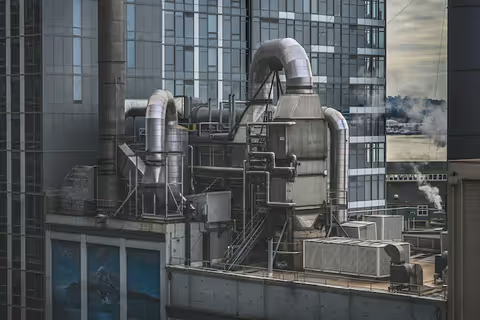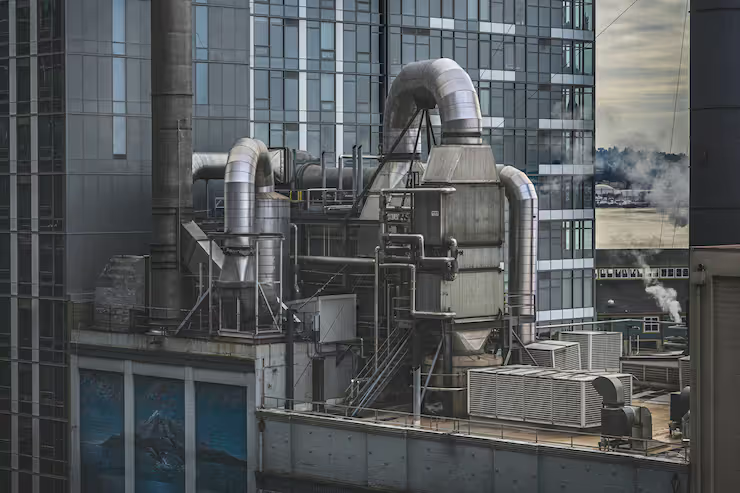
Industrial heaters are specialized systems designed to generate and control heat for various industrial processes. These systems are widely used in manufacturing, chemical processing, food production, oil and gas operations, and many other sectors where controlled heating is essential.
The primary purpose of industrial heaters is to maintain consistent temperatures required for processes such as drying, melting, curing, sterilizing, and chemical reactions. Without reliable heating systems, many industrial operations would either become inefficient or fail to meet required standards.
Industrial heaters exist because industries demand precision, scalability, and efficiency in temperature management. Unlike residential heating systems, industrial heaters are engineered to handle larger capacities, higher temperatures, and continuous operation under demanding conditions.
Why Industrial Heaters Matter Today
Industrial heaters play a significant role in modern industries due to increasing demand for energy efficiency, process reliability, and environmental responsibility.
They affect a wide range of stakeholders, including:
- Manufacturing industries requiring consistent production output
- Energy sectors focusing on thermal efficiency
- Environmental regulators monitoring emissions
- Engineers and plant operators managing performance and safety
Key problems industrial heaters help solve include:
- Maintaining uniform temperature across processes
- Reducing energy wastage
- Improving product quality
- Supporting automation and process control
With growing industrialization and stricter environmental expectations, efficient heating systems have become essential for maintaining operational standards while minimizing environmental impact.
Recent Updates and Trends in Industrial Heaters
Over the past year (2025–2026), several notable trends have shaped the development and use of industrial heaters.
Shift Toward Energy Efficiency
Industries are increasingly adopting energy-efficient heating technologies to reduce energy consumption. Advanced insulation materials and smart control systems are being integrated into modern heaters.
Electrification of Heating Systems
There has been a shift from fossil fuel-based heaters to electric industrial heaters. This transition supports global decarbonization goals and reduces emissions.
Integration with Smart Technologies
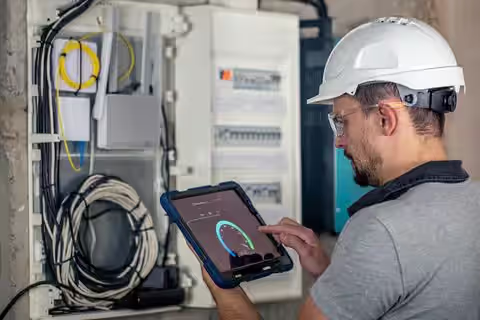
Industrial heaters are now often connected with IoT (Internet of Things) systems. These allow real-time monitoring, predictive maintenance, and improved process control.
Adoption of Renewable Energy Integration
Some industries are integrating renewable energy sources such as solar and wind with heating systems to reduce dependence on conventional energy.
Focus on Safety Enhancements
Recent updates emphasize enhanced safety mechanisms, including automated shutdown systems, temperature sensors, and fail-safe controls.
Laws and Policies Affecting Industrial Heaters
Industrial heaters are subject to various regulations depending on the country and industry. These rules aim to ensure safety, environmental protection, and energy efficiency.
Environmental Regulations
Governments have introduced emission standards to control pollutants released by industrial heating systems. These regulations encourage the use of cleaner technologies.
Energy Efficiency Standards
Many countries have established energy performance standards for industrial equipment. These guidelines promote efficient energy use and reduce waste.
Workplace Safety Regulations
Industrial heaters must comply with safety standards related to:
- Temperature control
- Fire prevention
- Equipment maintenance
- Worker protection
Government Programs
Some governments support industries in upgrading heating systems through incentives for energy-efficient technologies and sustainable practices.
Tools and Resources for Industrial Heaters
Several tools and resources help industries design, manage, and optimize heating systems effectively.
Common Tools and Platforms
- Thermal calculation software for heat load analysis
- Energy efficiency calculators
- Industrial automation systems for temperature control
- Maintenance management software
- Monitoring dashboards for real-time data tracking
Helpful Resources
- Industry standards documentation
- Technical manuals and design guides
- Engineering simulation tools
- Training modules for operators
- Research publications on heating technologies
These tools enable better decision-making, improved system performance, and enhanced safety.
Types of Industrial Heaters and Their Applications
Different types of industrial heaters are used based on specific requirements. The table below provides a simple comparison.
| Type of Heater | Working Principle | Common Applications | Key Advantages |
|---|---|---|---|
| Electric Heaters | Converts electricity into heat | Manufacturing, laboratories | Precise control, low emissions |
| Gas-Fired Heaters | Burns gas to generate heat | Oil & gas, chemical processing | High heat output |
| Infrared Heaters | Uses radiation for heating | Drying, curing | Fast and efficient heating |
| Induction Heaters | Uses electromagnetic induction | Metal processing | Energy efficient, localized heat |
| Steam Heaters | Uses steam for heat transfer | Food processing, textiles | Uniform heating |
Each type serves a specific purpose and is selected based on process requirements, efficiency goals, and environmental considerations.
Frequently Asked Questions
What are the main types of industrial heaters?
Industrial heaters can be categorized into several types, including electric heaters, gas-fired heaters, infrared heaters, and induction heaters. Each type is used based on the application, required temperature, and energy source.
How do industrial heaters improve energy efficiency?
Modern industrial heaters use advanced controls, insulation, and heat recovery systems to minimize energy loss. Smart monitoring also helps maintain optimal operating conditions.
Where are industrial heaters commonly used?
They are widely used in industries such as manufacturing, food processing, oil and gas, chemical production, and pharmaceuticals for tasks requiring controlled heating.
What factors affect heater selection?
Key factors include temperature requirements, type of material being processed, energy source availability, efficiency needs, and safety considerations.
Are industrial heaters environmentally sustainable?
Newer systems are designed to reduce emissions and energy consumption. Electric and hybrid heaters are becoming more popular due to their lower environmental impact.
Conclusion
Industrial heaters are a critical component of modern industrial operations. They enable precise temperature control, support efficient production processes, and contribute to maintaining product quality.
With increasing focus on sustainability and energy efficiency, industrial heating systems are evolving rapidly. Advances in technology, stricter regulations, and growing environmental awareness are driving the adoption of smarter and cleaner heating solutions.
Understanding the types, applications, and trends of industrial heaters helps industries make informed decisions and improve operational performance. As industries continue to innovate, industrial heaters will remain an essential part of efficient and responsible manufacturing systems.